


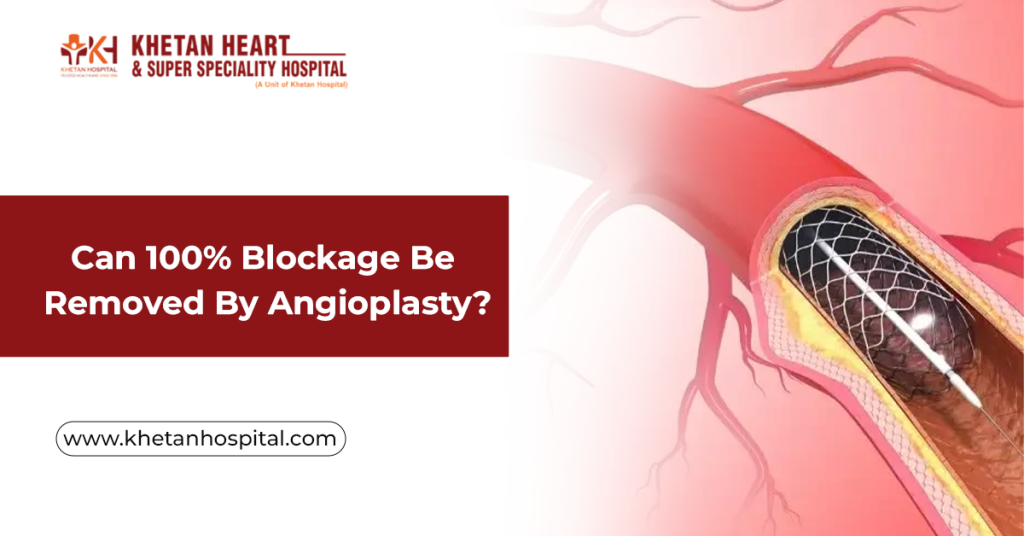
Being told that one of your heart arteries is 100% blocked can be frightening. Many people immediately think they need bypass surgery, but that isn’t always the case. In some cases, angioplasty can unblock the blocked artery and enhance blood flow. In others, a different treatment may be safer. The choice that’s best for you depends on your heart health, the type of blockage, and your overall health. So let’s dig into the blog and undertand the Can 100% Blockage Be Removed by angioplasty.
What Does a 100% Blockage Actually Mean?
A 100% blockage means blood is no longer flowing through that artery in the heart as it should. This is usually a sluggish process that takes a few years, with fatty deposits building up inside the artery. A completely clogged artery doesn’t necessarily mean your heart isn’t getting blood. Sometimes the body creates small alternative blood vessels to the location. These extra veins can help, but they may not supply enough blood when your heart is working harder.
Some people see warning signs such as:
- Pain or pressure in the chest
- Shortness of breath when walking
- Arm, jaw, or shoulder pain
- Experiencing unusual exhaustion
Can 100% Blockage Be Removed By Angioplasty?
Yes, it can – but not always. A 100% blocked artery does not always mean that you have to get bypass surgery. If the blockage is appropriate, angioplasty can unblock the artery and increase blood flow without surgery on the heart. Your cardiologist will thoroughly check your: Before proposing the operation,
- Location of the blockage.
- Duration of arterial occlusion.
- Whether the cardiac muscle can still benefit from improved blood flow.
These factors will help determine if your angioplasty is the safest and most effective treatment for you.
When Do Doctors Recommend Angioplasty?
The blockage percentage is only part of the picture. Your cardiologist will review your angiogram and other tests that have been done on your heart to determine if angioplasty is likely to safely improve blood flow before recommending it.
Angioplasty is commonly considered if any of the following apply:
- Persistent chest discomfort despite medication.
- The blocked artery can be reached safely.
- The heart muscle is still likely to benefit.
- You are well enough to have the surgery.
If you are looking for the Best Cardiology Hospital In Jaipur, then going for an experienced cardiac team with advanced facilities can make a huge difference in both treatment planning and recovery.
When Isn’t Angioplasty the Right Choice?
Angioplasty has benefited many people with fully clogged arteries, but it’s not right for all. Sometimes the obstruction is too long, too hard, or involves numerous main arteries. In certain cases, bypass surgery can achieve better and longer-lasting results.
Your doctor may recommend bypass surgery if:
- Severely obstructed arteries in the heart.
- The blockage cannot be crossed safely with a catheter.
- You have complex heart disease along with diabetes.
- Blood flow needs to be restored to different parts of the heart.
The choice isn’t about which treatment is “better.” It’s about choosing the one that gives you the safest and most effective outcome.
What Happens After Angioplasty?
Many people think after the stent is put in, that’s the end of treatment. That’s only the beginning of recovery. Angioplasty can increase blood flow, but the choices you make thereafter are what will keep your arteries open.
Your doctor could suggest you do things to safeguard your heart, such as:
- Take all prescribed medicines regularly.
- Avoid smoking and tobacco.
- Eat a heart-healthy diet.
- Keep active with frequent exercise.
- Control your blood pressure, cholesterol and diabetes.
- Do not miss follow-up appointments.
When Should You See a Cardiologist?
Get medical help early; don’t wait until you have severe chest pain. Heart disease often warns us long before an emergency occurs. Getting checked out early can help avoid serious complications.
If you notice: consult a cardiologist
- Pain, pressure, or tightness in the chest
- Breathlessness when doing activities of daily living
- Pain radiating to the arm, back, jaw or neck
- Unexplained tiredness
- Vertigo or fainting
Getting it checked early lets your doctor figure out what the problem is and offer the best therapy, before it worsens.
Conclusion
So, Can 100% Blockage Be Removed through angioplasty? It can in many circumstances, but there is no one-size-fits-all response. Your heart condition, your general health, and where the blockage is all matter. Instead of stressing over the percentage, seek a proper diagnosis from a skilled cardiologist. Early treatment can help improve blood flow and relieve symptoms and protect your heart for the future.